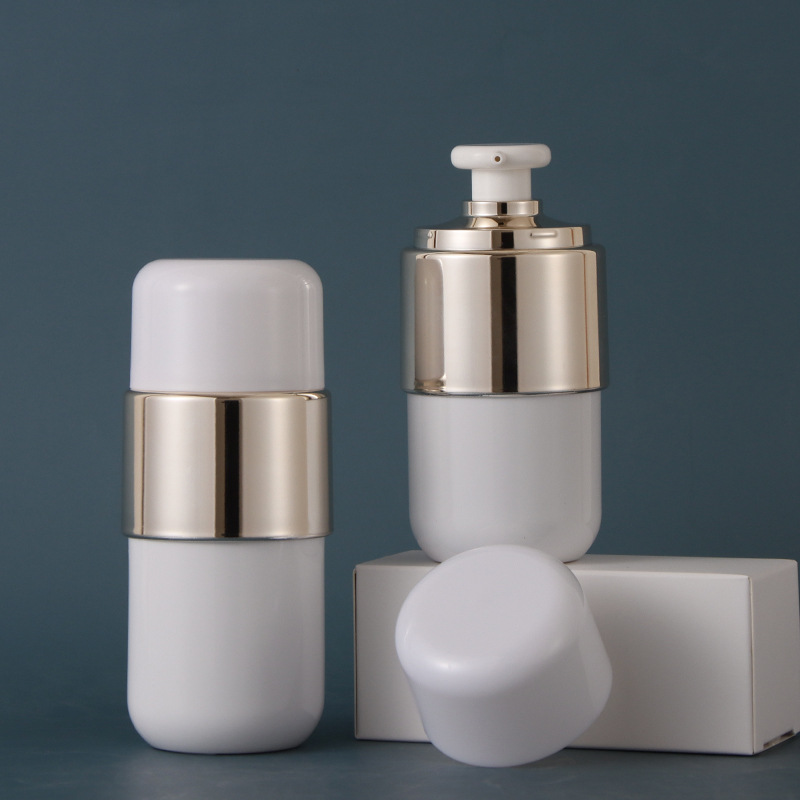
With the sustained prosperity of the global cosmetics market and the iterative upgrading of consumer demands, the high-end cosmetic bottle customization industry is undergoing a new wave of technological innovation and ecological transformation. By 2025, China, as one of the world’s largest cosmetics consumer markets, is demonstrating robust growth potential in its packaging bottle customization sector. Industry data indicates that the compound annual growth rate (CAGR) of China’s cosmetic bottle market is expected to exceed 15%, with high-end customization emerging as the core driver of this expansion.
Personalized Demand Sparks Design Revolution
Consumer expectations for aesthetic appeal and functionality in packaging are rapidly diversifying. High-end cosmetic bottle customization is evolving from a traditional "container" role to a "brand storytelling medium," making design innovation a competitive priority. For instance, smart labeling technology is being widely adopted, enabling consumers to scan codes for product traceability or interactive experiences, thereby enhancing brand trust. Modular design further empowers users to freely combine bottle bodies and accessories, catering to personalized usage scenarios such as switching between travel-sized and full-sized formats.
In material selection, glass bottles dominate the high-end market—particularly in perfumes and premium skincare—accounting for over 60% of usage, thanks to their transparency, premium texture, and eco-friendly attributes. Meanwhile, metal and ceramic bottles are gaining traction in niche luxury brands due to their unique aesthetic appeal and durability.
Green Technologies Lead Industry Sustainability Upgrades
Driven by environmental policies and consumer sustainability values, the high-end cosmetic bottle customization industry is accelerating its shift toward a circular economy. The adoption of bio-based plastics, recycled glass, and biodegradable materials has surged, with some companies reducing material consumption by up to 30% through lightweight designs. Regulatory frameworks such as the Regulations on the Supervision and Administration of Cosmetics and the Pollution Prevention and Control Measures for Plastic Packaging Products are further standardizing material choices and production processes.
Notably, breakthroughs in recycling systems are reshaping the industry ecosystem. For example, chemical recycling technologies are being deployed to convert discarded glass bottles into raw materials, enabling "closed-loop production." This not only reduces carbon emissions but also elevates brands’ ESG (Environmental, Social, and Governance) profiles.
Technology and Market Forces Drive Dual Innovation
Technological advancements are becoming critical competitive barriers in high-end bottle customization. AI-assisted design systems rapidly generate bottle prototypes aligned with brand identities, shortening R&D cycles, while microfluidic technology enables breakthroughs in functional packaging, such as precision-dosing pumps and temperature-sensitive color-changing bottles. The proliferation of flexible production lines has significantly lowered costs for small-batch, multi-variety custom orders, fueling participation from small and mid-sized brands.
Geographically, demand in China reflects regional divergence: first-tier cities prioritize glass and metal designs, while second- and third-tier cities, driven by e-commerce, are transitioning from plastic to "affordable luxury" glass bottles.
Future Outlook: Global Competition and Consumption Recovery
Despite a global slowdown in cosmetics market growth in 2024, China’s resilience stands out, with online sales rising by 6.84% year-on-year, creating incremental opportunities for high-end customization. Over the next five years, the industry will focus on two key strategies: leveraging cross-border collaborations to integrate global design resources, enhancing local brands’ international competitiveness; and deepening the integration of "functionality + experience," such as applying UV-resistant materials to transparent bottles or incorporating tactile coatings to improve user interaction.
Conclusion
The high-end cosmetic bottle customization industry stands at the intersection of technological and consumer-driven transformation. From material innovation to smart design, and from sustainability to global expansion, companies must prioritize innovation while balancing aesthetics and functionality to secure a competitive edge. With policy support and rebounding consumer confidence, this sector is poised to become one of the most value-added and dynamic segments within the cosmetics supply chain.